
01. When the Power Goes Out, the Clock Starts
 fire watch services" style="max-width:100%; height:auto; border-radius:4px; margin: 1em 0;">
Most Malibu property owners know their fire risk in terms of what burns outside. The compliance exposure runs the other direction — it starts inside the building, and it starts with the power going out.
A commercial building, hotel, multifamily property, or any structure with a monitored fire alarm system runs that system on backup batteries when utility power drops. Under NFPA 72, those batteries are engineered to hold the system in standby for twenty-four hours. That is the design standard, not a safety margin — after roughly a day without power, the system is no longer protecting the building.
California Fire Code §901.7 governs what happens next. When a required fire protection system is impaired for more than four hours in a twenty-four-hour period, the property owner notifies the fire code official, and the building is either evacuated or placed under an approved fire watch until the system is restored.
Now put those two facts against a Malibu red-flag event. Public Safety Power Shutoffs in the canyons and along Pacific Coast Highway routinely run longer than a day. The building's alarm system depletes on a schedule that can be predicted from the moment the shutoff notice arrives — which means the impairment is foreseeable, the notification obligation is foreseeable, and the fire watch requirement is foreseeable. Owners who discover this during the outage are solving it at the worst possible hour, in a corridor where deploying an officer takes longer than anywhere else in the county.
The irony is not lost on anyone who works here. The conditions that trigger the shutoff — wind, heat, low humidity — are the conditions that make an unmonitored building most dangerous. The safety measure creates the exposure.
This page covers what triggers a fire watch obligation in Malibu, what a compliant fire watch actually requires, and how coverage gets deployed in a market where the road in is often the only road in. Property owners facing a shutoff notice should treat the alarm system's standby window as a planning item, not a surprise — and should confirm the specific impairment interval with the Los Angeles County Fire Department, which serves as the Authority Having Jurisdiction for Malibu.
02. The Five Triggers
Fire watch obligations arrive from five directions. Malibu properties see all five, and most owners are only aware of the second.
System impairment. A fire alarm, sprinkler system, standpipe, or fire pump that is offline, under repair, or unreliable puts the building into impairment. The cause does not change the obligation — a planned service window, a failed panel, storm damage, and a depleted backup battery during a power shutoff all land in the same place. The distinction that matters is planned versus emergency impairment, because a planned impairment can be scheduled with coverage already arranged and a notification already filed.
Hot work. Welding, cutting, brazing, grinding, torch-applied roofing, and similar spark-producing operations require a fire watch during the work and for a defined period after it stops — thirty minutes at minimum, longer where the Authority Having Jurisdiction requires it, because the ignition that matters usually smolders before it shows. On a Malibu rebuild, hot work happens on a site surrounded by fuel that has already demonstrated what it does.
Construction and renovation. Buildings under construction frequently have no operational fire protection system at all, because it has not been installed or commissioned yet. That condition can run for months. Coverage during that window is a program rather than an incident response, and it is priced and staffed accordingly.
Special events. Temporary structures, open flame, pyrotechnics, propane heaters, and occupancy loads above the building's normal configuration can each trigger a fire watch requirement at the AHJ's direction. Estate events on the coast and in the canyons hit this more often than hosts expect, particularly where tenting and outdoor heating are involved.
AHJ directive. The fire code official holds independent authority to require a fire watch on any property presenting an elevated, unmonitored fire risk. In a Very High Fire Hazard Severity Zone during red-flag conditions, that authority gets used. A directive can arrive without any system being impaired at all.
The practical consequence: a Malibu property can be under a fire watch obligation without anything having failed. Owners who track only the second trigger are the ones who get surprised by the first and the fifth.
03. What a Compliant Fire Watch Looks Like in Malibu

A fire watch is not a security guard who happens to be on site. It is a defined life-safety function with a narrow scope, and the difference shows up when an inspector asks for the record.
The officer's sole duty is to watch for fire. That is the language, and it is restrictive by design — a fire watch officer is not simultaneously running access control, checking in vendors, or handling parking. Where a property needs both functions, both functions get staffed. Combining them into one body is the most common way a fire watch fails an inspection.
The function itself has four parts:
Continuous patrol on a defined route at defined intervals. The route covers the areas left unprotected by the impairment, and the interval is set by the AHJ or by the property's risk profile. Thirty-minute circuits are the common standard. The route is written before the watch starts, not improvised by whoever draws the shift.
Immediate notification capability. The officer can reach the fire department without delay and knows the property's address as the fire department understands it — which in Malibu is a specific problem worth naming. Properties on private drives, shared canyon access roads, and beach-side parcels frequently have an address that does not match how responding units navigate. A fire watch officer who cannot describe the approach costs the response minutes it does not have.
A written log that survives scrutiny. Every circuit is recorded with a time stamp, the areas covered, and conditions observed. Safety Host Unit documents fire watch coverage to California Office of the State Fire Marshal 2026 digital logging standards — time-stamped digital entries with photo support rather than a paper sheet filled in at the end of a shift. The distinction matters because the log is the only proof the watch happened, and paper logs completed retroactively are exactly what inspectors look for.
Notification and closeout. The AHJ is notified when the impairment begins and when the system is restored and tested. The watch ends when the system is back in service, not when the repair crew leaves.
The record is the deliverable. A property that ran a compliant fire watch and cannot prove it is in the same position as a property that ran none — exposed to citation, to red-tag closure, and to an insurance conversation that goes badly if anything burns.
04. Malibu's Geography Problem

Every operational fact about fire watch in Malibu runs through one constraint: the corridor.
The city spans roughly twenty-one miles of coastline strung along a single highway, with access inland limited to a handful of canyon roads — Malibu Canyon, Kanan Dume, Latigo, Las Flores, Topanga. Under normal conditions that geography is inconvenient. Under the conditions that produce fire watch obligations, it becomes the whole problem. Red-flag wind events close canyon roads. PCH incidents can isolate stretches of the coast for hours. The route an officer would take at 2 p.m. on a Tuesday may not exist at 2 a.m. during a wind event.
This has three consequences for how coverage gets staffed here.
Deployment time is a planning input, not a dispatch detail. A provider quoting a Malibu fire watch on the same response assumptions it uses in Culver City has not thought about the assignment. Coverage that has to arrive during an active red-flag event is staged differently from coverage arranged during a scheduled sprinkler service.
Relief has to be planned around access, not just around the clock. A twenty-four-hour watch on a canyon property requires shift changes that account for the officer coming off shift being able to leave and the officer coming on being able to arrive. In a corridor with one road in, a shift change during a closure is not a scheduling inconvenience — it is a coverage gap in a life-safety function.
Officers need to know the property before the night they are needed. Which gate is the one responding units will use. Where the water source is. Whether the property's driveway can turn an engine around. What the parcel looks like when it is dark and the power is out, which in Malibu means dark in a way that surprises people who have only seen it lit.
Safety Host Unit's model for the corridor is preparation rather than response. Properties with predictable exposure — multifamily and commercial buildings with monitored systems, hospitality properties, active rebuild sites, estates that host — get a site walk and a written plan before a shutoff notice arrives, so the deployment is an activation rather than an emergency search for an available officer.
For coverage that has to start tonight regardless, emergency and short-notice deployment is a separate service line.
05. Rebuild and Construction Sites

Fire-zone rebuild construction in coastal areas—including neighboring operations requiring fire watch in Pacific Palisades—carries fire watch obligations layered on top of site security, and the two functions are staffed separately even when the same provider delivers both.
Hot work on a rebuild — welding, torch-applied roofing, cutting — triggers a watch during the work and after it stops. A structure that has reached the point of having a fire protection system installed but not yet commissioned sits in impairment until it is signed off. And a site in a Very High Fire Hazard Severity Zone during red-flag conditions can draw an AHJ directive independent of what work is happening that day.
Site security, access control, material protection, and GC coordination for Malibu rebuild projects are covered in depth on the Malibu private security guide and the construction site security guide for LA County, including phased coverage as a build progresses. This page covers the compliance function that runs alongside it.
06. Getting a Fire Watch Started
If a system is already impaired: notify the Los Angeles County Fire Department, then arrange coverage. The notification is the property owner's obligation and it is time-sensitive. As outlined in the definitive guide to professional fire watch services, coverage that begins promptly and is documented from the first circuit is the difference between a compliance record and a gap in one.
If a shutoff notice has arrived: the planning window is open, and it closes when the batteries do. Arranging coverage against a predicted impairment costs less and staffs better than arranging it at hour twenty-six.
If a service window is scheduled: the impairment is known in advance. Coverage, notification, and closeout can all be arranged before the technician arrives.
Engagement runs the same way in each case: a site walk where time permits, a written watch plan covering route and interval, officers briefed on the property and its access, digital logging from the first circuit, and closeout documentation when the system returns to service.
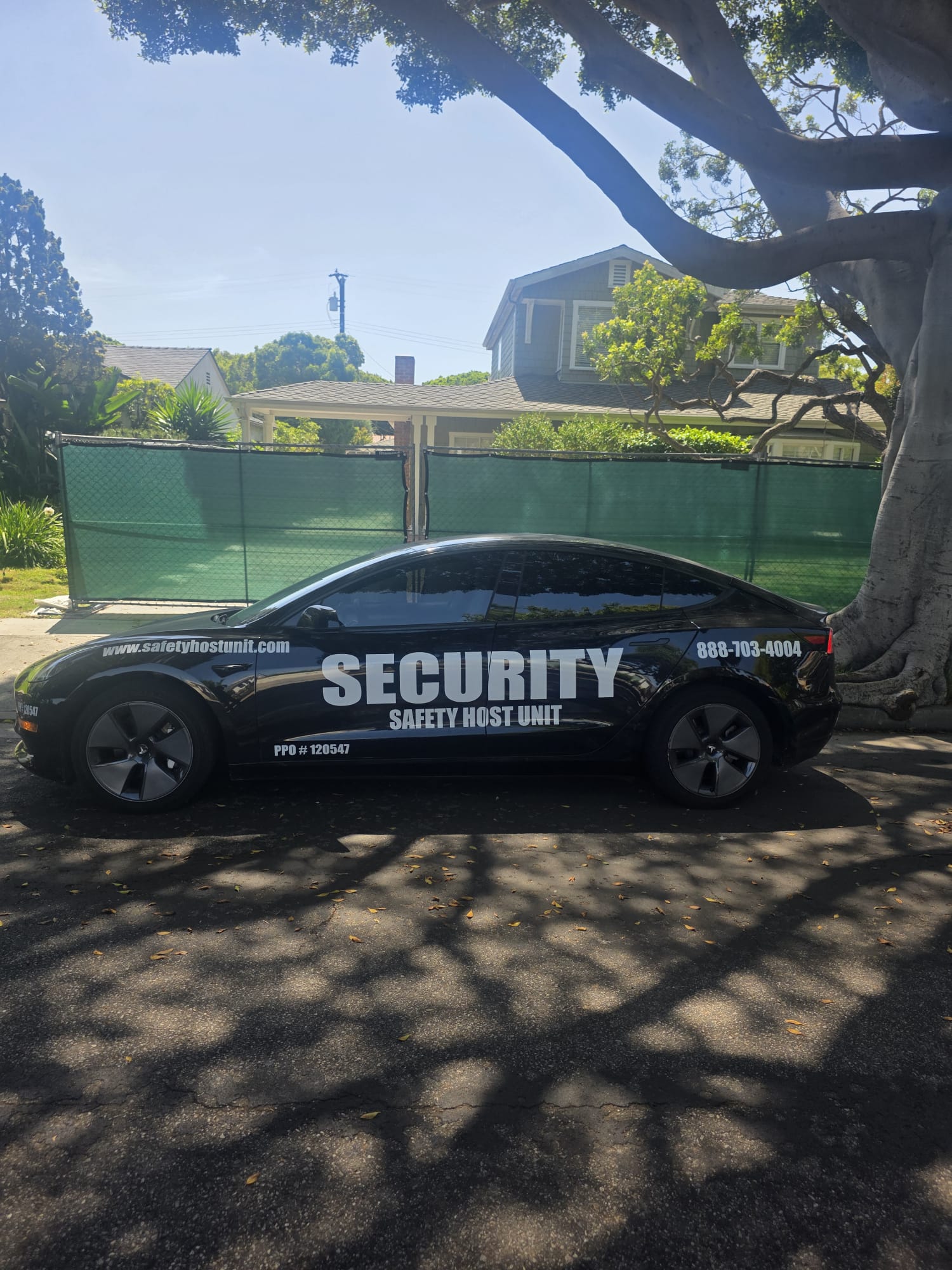
Safety Host Unit is a California-licensed Private Patrol Operator, PPO #120547, verifiable on the BSIS website. Officers carry current Guard Cards. General liability and workers' compensation coverage meets or exceeds commercial requirements, and clients are added as additional insured on request.
Frequently Asked Questions
Does a power outage actually require a fire watch? It can, and in Malibu it often does. The trigger is not the outage itself — it is the fire protection system going out of service once backup power depletes. NFPA 72 builds those batteries to a twenty-four-hour standby standard, so a shutoff that runs longer than a day puts a monitored building into impairment. Confirm the specific interval and notification requirement with the Los Angeles County Fire Department for your property.
Who do I have to notify? The Los Angeles County Fire Department serves as the Authority Having Jurisdiction for Malibu. Notification of an impairment is the property owner's responsibility, not the security provider's, though we can document the timeline as part of the watch record.
How quickly can coverage start in Malibu? Faster for properties with a plan already on file, and that gap is worth closing before a red-flag season rather than during one. Short-notice deployment is available; the honest constraint is the corridor, and any provider promising the same response time on PCH that it quotes inland is not being straight about the geography.
What patrol interval is required? Thirty-minute circuits are the common standard, but the interval is set by the AHJ or by the property's risk profile and can be tighter. The route and interval are written into the watch plan before coverage starts.
Can one officer handle fire watch and general security? No. A fire watch officer's sole duty is watching for fire. Properties that need both functions get both staffed. Combining them is a common way to fail an inspection.
What does the log have to show? Time-stamped entries for every circuit, the areas covered, and conditions observed, from the start of the impairment to closeout. We document to OSFM 2026 digital logging standards with photo support, because a paper log completed at the end of a shift is what inspectors are trained to spot.
Do I need a fire watch for hot work on my rebuild? Yes, during the work and for a defined period after it stops — thirty minutes at minimum, longer where the AHJ requires it. On a rebuild site surrounded by fire-affected terrain, that requirement is not a formality.
How long does a fire watch last? Until the impaired system is restored and tested, and the AHJ is notified of the restoration. The watch does not end when the repair crew leaves.
What does it cost? Fire watch is priced hourly against the coverage required, with continuous coverage staffed the way any twenty-four-hour post is staffed. Minimum shift lengths apply. Planned impairments price better than emergencies for the obvious reason.
Safety Host Unit — Where security meets responsibility. A Promise Kept.
California Private Patrol Operator PPO #120547 | Serving Malibu, the canyons, and Los Angeles County 888-703-4004 | info@safetyhostunit.com
